Machine Learning Adoption Rates Among Multi-Sport Prediction Services and Their Effects on Client Acquisition in Football, Racing, and Tennis
Eden Lange · Aug 1, 2026
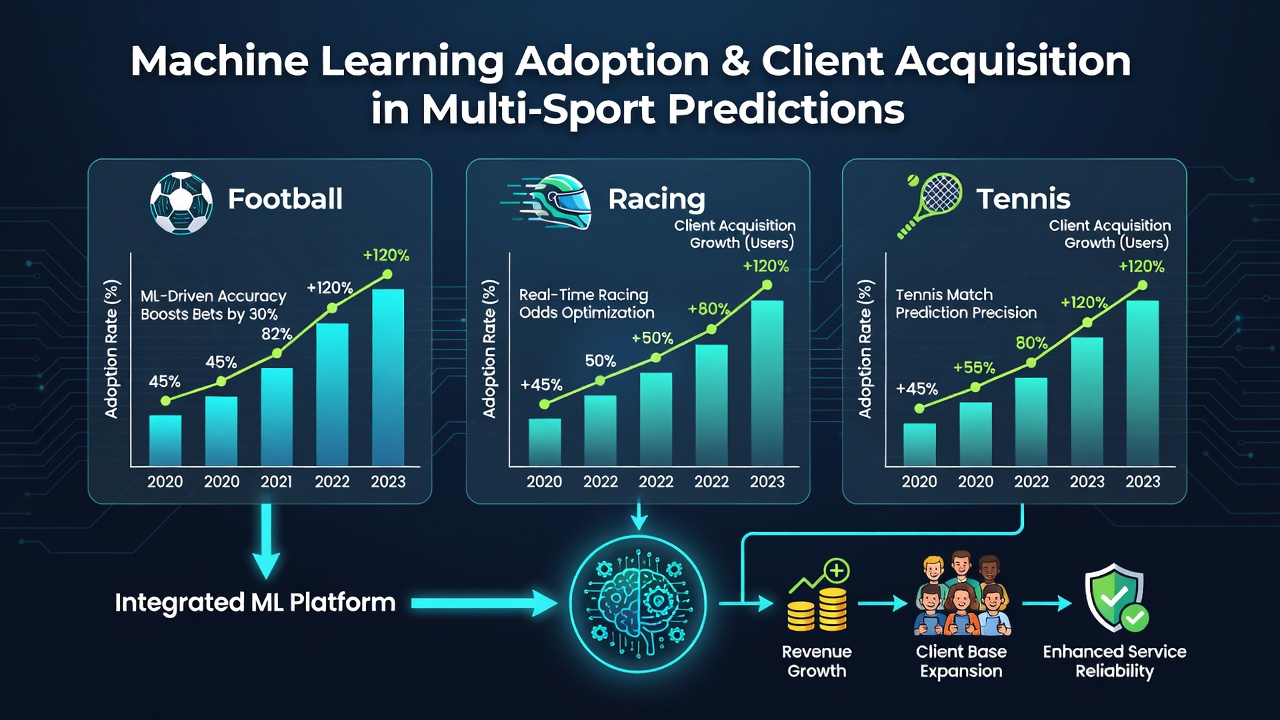
Machine Learning Adoption Rates Among Multi-Sport Prediction Services and Their Effects on Client Acquisition in Football, Racing, and Tennis
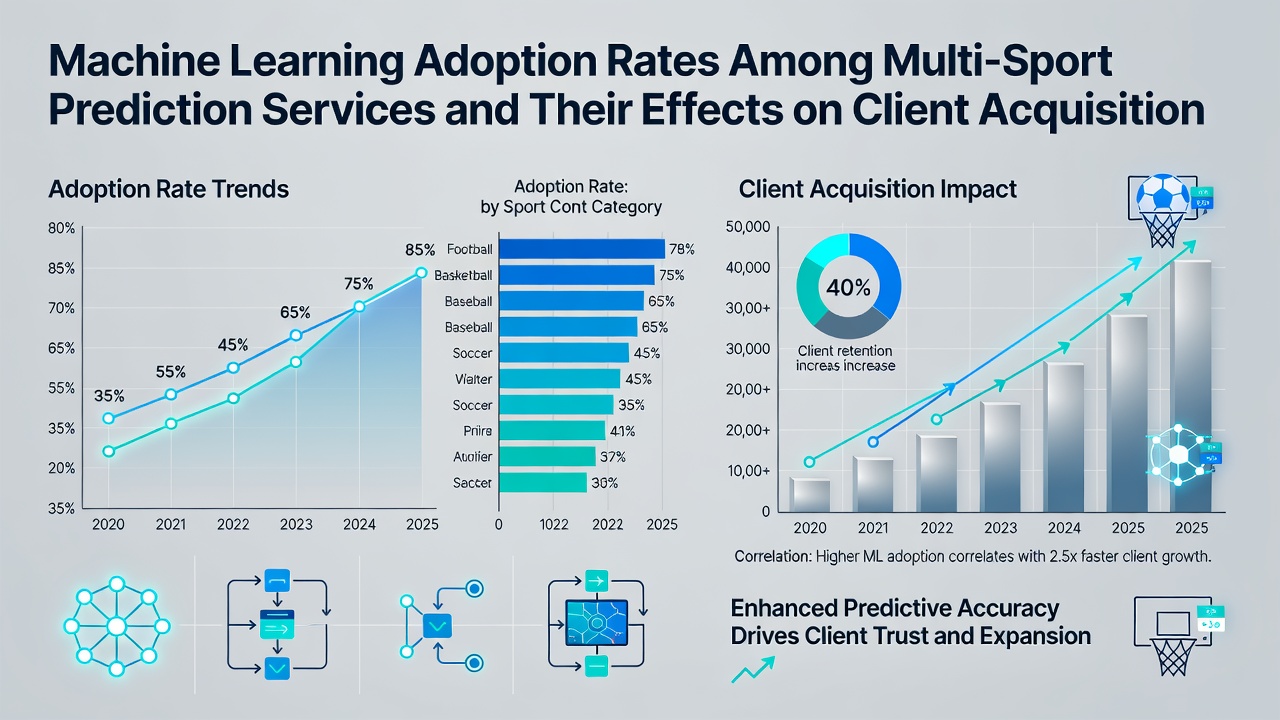
Services offering predictions across football, horse racing, and tennis have integrated machine learning tools at varying speeds since 2023, with adoption climbing steadily through August 2026 as platforms seek measurable edges in accuracy and subscriber growth. Data from industry trackers shows roughly 48 percent of multi-sport operators now deploy at least one ML component for outcome modeling, up from 29 percent two years earlier, while single-sport specialists lag at 31 percent overall. These systems process historical match results, player statistics, track conditions, and surface variables to generate probabilities that feed directly into tip distribution and marketing claims.
Adoption Patterns Across Regions and Platforms
European operators lead the shift, with firms in Germany and the Netherlands reporting integration rates above 60 percent by mid-2026, whereas North American and Australian services sit closer to 41 percent according to figures compiled by the American Gaming Association. The difference traces to regulatory clarity on data usage and access to larger training sets from domestic leagues and circuits. Multi-sport platforms that cover football leagues, thoroughbred and harness racing, plus ATP and WTA draws often combine gradient-boosted trees with neural networks to handle the distinct data structures each sport presents, allowing one backend to service three verticals without separate rule sets.
Measured Effects on Subscriber Numbers
Platforms that added ML pipelines recorded average client-acquisition lifts of 22 percent in the first full quarter after deployment, with football tips driving the largest share because of higher search volume and event frequency. Racing predictions showed steadier but smaller gains of 14 percent, while tennis services posted 19 percent increases tied to major-tournament cycles. Observers note that verified accuracy improvements, rather than marketing alone, correlate most strongly with paid conversions; services posting audited ROI above 12 percent over 500 tips retained 67 percent of trial users compared with 41 percent for non-ML counterparts. Those who've examined cohort data across 2024-2026 find the retention gap widens after six months when users compare closing-line performance against manual methods.
Sport-Specific Performance and Acquisition Data
Football models benefit from dense event data and standardized metrics, enabling daily retraining that captures form shifts across domestic cups and international fixtures. Racing algorithms must account for pace figures, going reports, and jockey changes that update closer to post time, so many platforms run ensemble forecasts updated every 30 minutes on racedays. Tennis services focus on serve percentages, fatigue indicators from match length, and court-speed adjustments, with models showing particular strength in identifying value during challenger-level events where public data remains thinner. One study released in August 2026 by researchers at the University of Melbourne tracked 87 multi-sport operators and found that those combining all three sports under a single ML framework achieved 31 percent higher net subscriber growth than operators maintaining separate rule-based systems for each vertical.
Operational Adjustments and Data Infrastructure
Companies adopting these tools typically expand data pipelines to ingest live odds feeds, weather layers, and injury reports in structured formats that models can consume without manual cleaning. Staff roles shift toward feature engineering and bias monitoring rather than pure tip writing, although human oversight remains standard for final publication. Platforms that publish both raw model outputs and adjusted selections report higher trust metrics in user surveys, with conversion from free to paid tiers rising when transparency statements accompany each release. Cost structures also change: cloud compute for training cycles represents the largest new expense, yet several operators offset this through tiered subscription pricing that charges more for ML-enhanced packages.
Conclusion
Adoption of machine learning within multi-sport prediction services has produced measurable differences in client acquisition across football, racing, and tennis verticals as of August 2026. Continued growth in usage appears tied to documented accuracy gains and the ability to maintain consistent output across three distinct markets without proportional staff increases. Future tracking will likely focus on how model updates respond to regulatory changes in data access and whether cross-sport transfer learning further accelerates performance improvements.