How Mobile Platforms Aggregate Crowd Wisdom to Refine Selection Accuracy Across League Fixtures, Race Meetings, and Court Encounters
Eden Lange · Jul 30, 2026
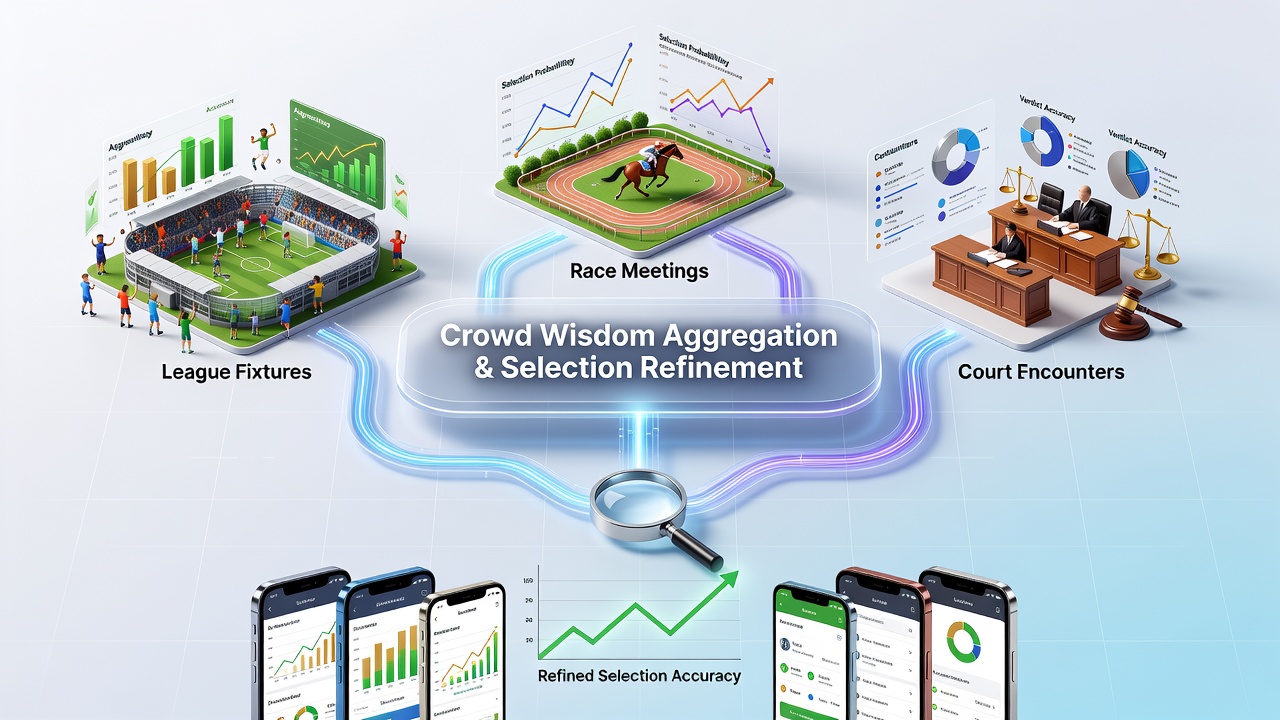
How Mobile Platforms Aggregate Crowd Wisdom to Refine Selection Accuracy Across League Fixtures, Race Meetings, and Court Encounters
Mobile platforms collect user-generated predictions on upcoming events and process those inputs through algorithms that weigh accuracy histories, participation rates, and consensus strength, and this process has gained traction by July 2026 across football league fixtures, horse race meetings, and tennis court encounters. Data aggregation begins when users submit selections through dedicated apps, after which systems apply statistical models to identify patterns that individual forecasts often miss, and those models adjust in real time as new submissions arrive.
Core Mechanisms of Crowd Data Collection
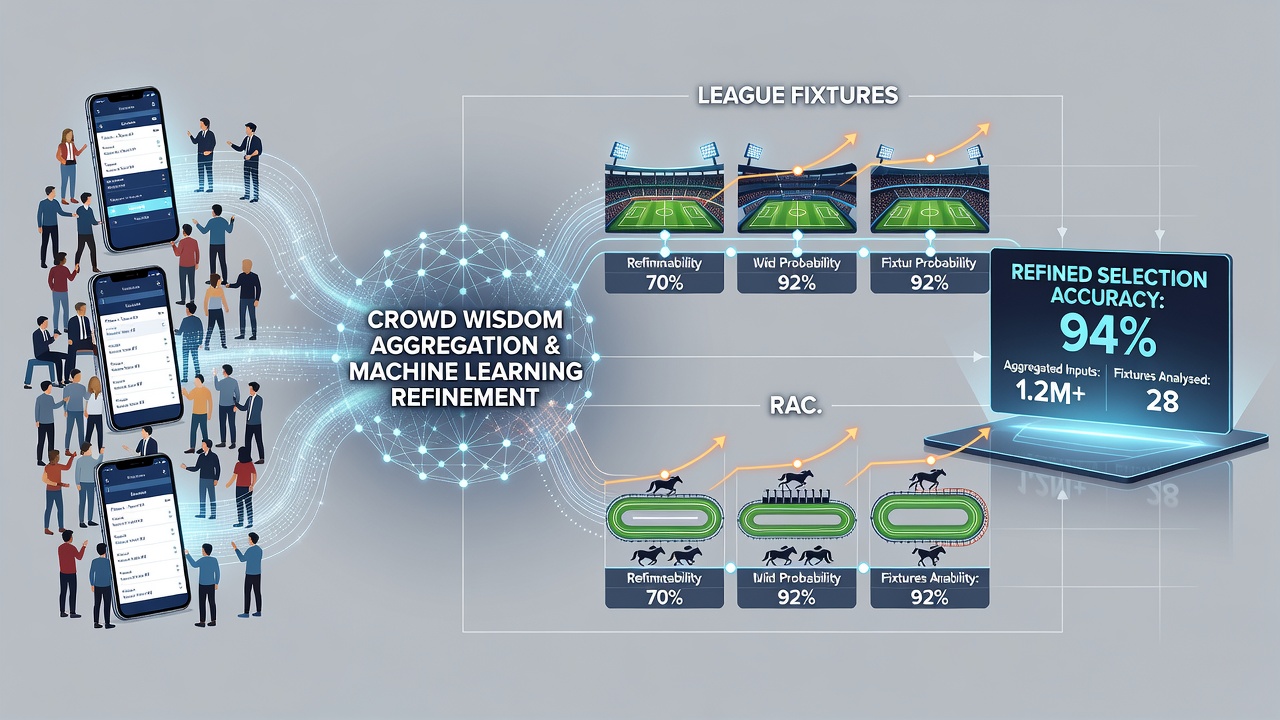
Platforms record each prediction alongside metadata such as submission timing, historical success rates for that user, and event-specific variables, then feed the information into ensemble methods that blend majority votes with performance-weighted adjustments. Researchers at institutions tracking digital betting behavior note that simple averaging gives way to more sophisticated techniques, including Bayesian updating and machine learning classifiers, because raw crowd inputs contain noise from casual participants alongside sharper signals from consistent contributors. In practice, a football match prediction from a user wth a verified 62 percent strike rate over two seasons receives higher influence than one from a new account, and similar weighting applies to race selections at meetings or tennis outcomes on court.
Application Across Football League Fixtures
League schedules generate thousands of data points each week, and mobile systems capture crowd forecasts on win probabilities, goal totals, and handicap spreads before consolidating them into refined probability estimates. One study released in early 2026 by a European sports analytics group showed that aggregated crowd models reduced error margins on match outcome predictions by 11 percent compared with standalone expert panels when tested across major European leagues. Platforms display live leaderboards that encourage continued participation, yet the backend focuses on calibration, so that overconfident streaks from any single user lose influence automatically once deviation from actual results accumulates.
Handling Horse Race Meetings and Variable Conditions
Race meetings introduce additional complexity through track surfaces, weather shifts, and field sizes, and crowd wisdom platforms address these factors by allowing users to tag predictions with specific conditions while the system cross-references submissions against historical performance under similar circumstances. Observers note that accuracy improves when platforms segment data by race type, letting late entries from experienced contributors carry more weight in sprint or staying events. By July 2026 several major racing apps had integrated satellite weather feeds directly into their aggregation engines, enabling dynamic reweighting of crowd picks as conditions change on race day.
Refinement in Tennis Court Encounters
Tennis draws span singles, doubles, and team events across varied surfaces, and mobile aggregation tools track crowd forecasts on set scores, match durations, and player-specific metrics such as first-serve percentages. Systems apply surface-specific filters because crowd accuracy tends to rise on familiar conditions like clay or grass while dropping on less common indoor hard courts. Figures from an Australian sports data consortium released mid-2026 indicated that weighted crowd models outperformed unweighted averages by margins of 8 to 14 percent across Grand Slam and ATP events when measured against closing market lines.
Technical Integration and Continuous Calibration
Developers combine real-time submission streams with post-event verification to recalibrate user credibility scores after every completed fixture, race, or match, and this feedback loop prevents any small group from dominating long-term outputs. And because mobile devices supply geolocation and timing data, platforms can further refine inputs by discarding or down-weighting entries that arrive after markets have moved significantly. The result appears in published probability distributions that bettors and analysts consult when preparing selections for upcoming league rounds, race cards, or court schedules.
Conclusion
Mobile platforms continue to refine crowd aggregation techniques by expanding data sources and tightening verification protocols, and these developments have produced measurable gains in selection accuracy across football, racing, and tennis by July 2026. Continued monitoring from independent research bodies will determine how far such systems can push predictive reliability without introducing new biases from participation patterns or platform design choices.